How to Understand Solana and Its Growing Role in Crypto Markets
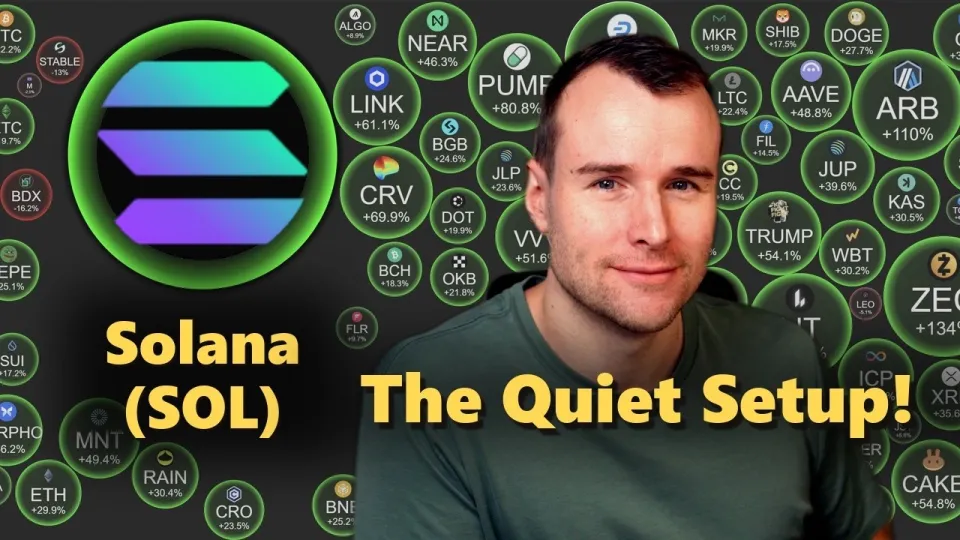
Video: 🚀 Solana Is Quietly Winning - SOL Crypto Analysis
Need articles like this for your video? They help promote it on YouTube and Google — order them in the Telegram bot @sat_sit_bot. Articles with your video embedded are written and posted by the bot itself — on popular topical sites (no ads). Try it free: 50 articles on us.
· based on the channel Bitcoin Strategy
Key takeaways
- Solana offers some of the fastest transaction speeds with low fees.
- SOL token inflation is lower compared to many competitors.
- Firedancer upgrade aims to improve Solana’s network performance.
- Solana’s fee structure has stabilized since summer 2026.
- Ethereum remains ahead in smart contract adoption but Solana narrows the gap.
Solana is quietly emerging as a leading blockchain platform due to its fast transaction speeds, low fees, and ongoing technological upgrades. The SOL token has shown resilience and potential for growth, supported by innovations like the Firedancer upgrade and increased interest from institutional investors. For those looking to buy Solana or understand its market dynamics, this analysis draws on recent data and insights from the Bitcoin Strategy channel to highlight why Solana is gaining traction in 2026. Register for a bonus and explore trading options here.
What Sets Solana Apart in the Crypto Ecosystem
Solana’s primary competitive advantage lies in its ability to process thousands of transactions per second at a fraction of the cost typical on networks like Ethereum. This speed and affordability come from Solana’s unique proof-of-history consensus mechanism combined with proof-of-stake, which enables rapid block validation.
Key features include:
- High throughput: Solana can handle up to 65,000 transactions per second.
- Low transaction fees: Average fees remain under a fraction of a cent, making it attractive for developers and users.
- Network upgrades: The Firedancer upgrade, still rolling out, promises even greater scalability and stability.
These factors have helped Solana attract decentralized finance (DeFi) projects, NFT marketplaces, and other applications seeking scalable infrastructure.
Current State of Solana’s Network and Price Trends
As of the latest analysis in October 2026, Solana’s network fees have stabilized following a period of volatility earlier in the year. This stabilization is crucial for maintaining user confidence and encouraging adoption. The SOL price has shown steady appreciation, partially driven by reduced inflation rates of the token and increasing institutional interest.
The SOL token inflation has been lowered compared to previous years, helping to reduce selling pressure and support price growth. Market observers predict that if fundamental metrics continue to improve, SOL could experience a significant price breakout, with some forecasts speculating targets between $600 and $1000 in the medium term.
Comparing Solana and Ethereum: Strengths and Weaknesses
While Ethereum remains the dominant smart contract platform with the largest developer community and DeFi ecosystem, Solana is catching up in several areas:
- Transaction Speed: Solana processes transactions much faster than Ethereum’s current average.
- Transaction Fees: Solana’s fees are consistently lower, which is critical for user adoption.
- Network Stability: Ethereum has proven more stable historically, but Solana’s upgrades aim to close this gap.
Ethereum still leads in decentralized app (dApp) variety and total value locked (TVL), but Solana’s ecosystem growth, fueled by projects like Alpenglow and BSOL, indicates a narrowing gap.
Common Questions About Solana’s Inflation and Tokenomics
One frequent concern among investors is Solana’s inflationary token model. While SOL does have inflation, recent protocol changes have reduced its rate, making it more attractive as a long-term holding. The balance between inflation and network rewards incentivizes holders while funding network security.
Additionally, Solana’s fee structure helps offset inflationary effects by burning a portion of the transaction fees, contributing to token scarcity over time.
How Institutional Interest and ETFs Impact Solana’s Future
Solana’s growing inclusion in crypto ETFs and inflows from institutional investors add legitimacy and liquidity to the token. These developments often precede broader adoption and price appreciation. The Bitcoin Strategy channel highlights that ETF inflows can provide a steady demand base for SOL, contrasting with more volatile retail trading patterns.
Moreover, developments like the Firedancer upgrade are expected to improve network throughput and reliability, attracting more professional traders and developers.
Summary and Next Steps
Solana’s combination of high speed, low fees, and ongoing technological enhancements position it as a quietly winning blockchain in 2026. While Ethereum remains the reigning smart contract platform, Solana’s ecosystem growth and improving tokenomics make it a compelling contender.
For investors and traders interested in SOL, staying informed through detailed analyses like those from the Bitcoin Strategy channel is essential. Consider exploring automatic copy trading and charting tools available at https://the-bitcoin-strategy.com/r/gOETmjod to align your strategies with market trends.
Useful Links
- Automatic Copy Trading and Bonuses: https://the-bitcoin-strategy.com/r/gOETmjod
- TradingView Chart Software: https://the-bitcoin-strategy.com/tradingview
- Hardware Wallet Recommendations: https://the-bitcoin-strategy.com/ledger
Conclusion
Understanding Solana involves recognizing its technical advantages, tokenomics, and market positioning relative to Ethereum. The SOL token’s reduced inflation, stabilized fees, and network upgrades like Firedancer contribute to its potential for strong growth. The Bitcoin Strategy channel provides valuable insights and updates that can help traders and investors navigate Solana’s evolving landscape effectively.
Source: 🚀 Solana Is Quietly Winning - SOL Crypto Analysis · Markdown version
Questions & answers
Is Solana inflationary and how does it affect SOL price?
Solana has an inflationary token model but recent protocol adjustments have lowered inflation rates. Additionally, part of the transaction fees is burned, which helps reduce supply and can support the SOL price over time.
How does Solana compare to Ethereum in terms of fees and speed?
Solana processes transactions much faster than Ethereum and has significantly lower fees, making it more attractive for high-volume and small transactions. However, Ethereum still leads in ecosystem size and network stability.
What is the Firedancer upgrade and why is it important?
Firedancer is a network upgrade aimed at increasing Solana's scalability and reliability. It is expected to enhance transaction throughput and network stability, which will help attract more developers and institutional users.
Are institutional investors showing interest in Solana?
Yes, Solana has seen increasing inflows from institutional investors and inclusion in crypto ETFs. This growing institutional interest provides liquidity and legitimacy, often leading to more stable price appreciation.